Counting women, ending homelessness - The Churchill Fellowship

Counting women, ending homelessness

It should be possible for us to end women’s homelessness.

We know what causes it, what the drivers and accelerators are, and the solutions that will bring it to an end – so how do we get there and reduce the disruption, misery, and harm that homelessness causes? This was the question that shaped my Churchill Fellowship.

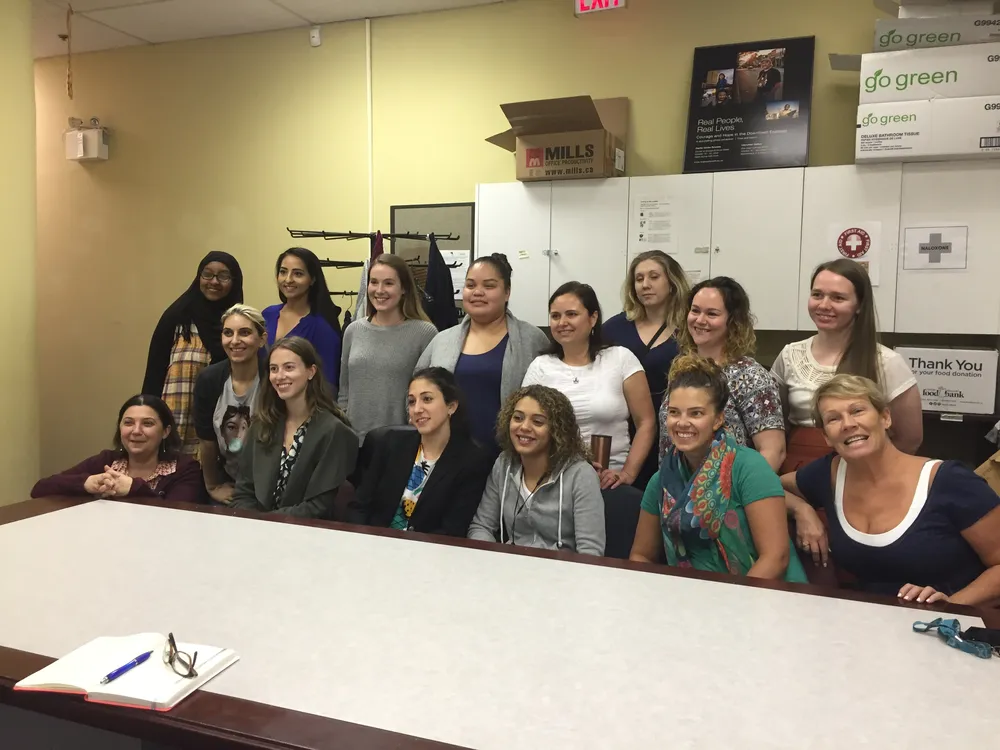
Staff at Atara Women's Resource Centre, Vancouver Download 'Sarah Walters blog - IMG_1028'

We can’t solve a problem that we can’t see. The starting point is knowing who is experiencing homelessness in a locality; otherwise, flawed commissioning and service design can follow. However, the current system for counting those experiencing the worst forms of homelessness is flawed.

The annual Rough Sleeping Snapshot is just that – a point-in-time assessment on a single night of those who appear to be bedded down. It does not reflect the fact that women experience homelessness differently from men. They are more likely to be hidden, either staying with unsuitable companions, travelling on night buses, using 24-hour fast-food restaurants or A&E, or simply walking all night – all to avoid the danger of being on the street and alone.

The Women’s Rough Sleeping Census seeks to address those flaws, counting women in a way that reflects their experience of homelessness, using the intelligence within the sector in partnership with the local authority. Local areas using this approach have often seen women counted for the first time, with figures revealing more than 10 times the number of women rough sleeping than the Rough Sleeping Snapshot would indicate.

"Knowing the numbers is only the start... we need to ensure the services we provide for women are gender-informed and trauma-aware."

Knowing the numbers is only the start. Once we know the numbers, we need to ensure the services we provide for women are gender-informed and trauma-aware. Women experiencing homelessness present differently from men; the causes, consequences, and routes out of homelessness are not the same, and a meaningful offer will reflect that.

In 2017, I was awarded a Churchill Fellowship to explore how other countries were working to end homelessness for women. I went to the USA and Canada and saw how gender-informed and trauma-aware services could change women’s experiences and provide them with support that became a springboard into a new life.

The breadth of projects had no equivalent in the UK at that time, including places where palliative care could be delivered for women, and housing for women fleeing abuse, leaving prison, becoming young mothers, or learning to work and live independently. What was on offer was impressive, empathetically delivered, and life-changing.

Taking what was learned from Fellowship visits and applying it to our local context is the cornerstone of the Fellowship experience. I was thrilled to be involved in the setting up of a women’s pathway, including a women-only hotel, open for a two-week period over Christmas 2025 as part of the Crisis at Christmas offer.

Crisis has offered residential respite over Christmas for guests for over 50 years, but the offer for women has generally not been as successful as that for men. The reasons are complex, but we wanted to deliver something that built on our knowledge of what works. This meant a hotel that was for women only, fully staffed by women, including security, within an environment that was restful and restorative. We used the definition of rough sleeping from the Women’s Rough Sleeping Census as our criteria.

"Taking what was learned from Fellowship visits and applying it to our local context is the cornerstone of the Fellowship experience."

This offer was realised through the provision of a 41-bed respite and retreat facility. It was a beautiful and peaceful space. The women visibly relaxed; their trauma responses were not triggered by loud noises and frenetic activity, making casework a bit easier. There were a few men around, in catering and hotel management roles, but they were respectful and discreet.

We had female volunteers and Crisis staff, female security guards, and activities designed to support rest and wellbeing, including spa and sauna trips. There was also a clothing store full of quality donated goods for women.

The results, so far, are more than we could have hoped or imagined.

95% of women from the women’s pathway were not seen rough sleeping between the hotel’s closing date and the end of January. We’ll have some more data soon but hope to see that trajectory maintained.

A higher proportion of women referred left to go into their own accommodation than had been seen in previous years. They were overwhelmingly grateful.

One woman shared: ‘It was nice to feel warm, like at home… Every morning when I wake up, I still think that I am dreaming. But it is not a reality that needs to be fought. I will be able to live and work normally again.’

The women’s pathway is a start. It has shown what is possible when services are designed around women’s experiences of homelessness, rather than adapted from models that were not built with them in mind. We’re building on it for Christmas 2026 with an ambition to transform services at Crisis too. The Fellowship has inspired, and continues to inspire, this change.

Disclaimer

The views and opinions expressed by any Fellow are those of the Fellow and not of the Churchill Fellowship or its partners, which have no responsibility or liability for any part of them.

Related

Blogs & conversations

In conversation with Natasha Cox: Learning leads to new creative Saturday school for Black boys

We spoke to Natasha Cox about how her Churchill Fellowship helped shape the next stage of Actively SeeK.I.N.G, the CIC she founded to support Black boys through creative arts. Drawing on learning from schools in the USA, Ghana, and the Caribbean, Natasha has launched the House of K.I.N.G.s Saturday School. She reflects on how the Fellowship deepened her work, opened new doors, and helped turn her research into practical support for young people in East London.

By Natasha Cox,

Blogs & conversations

Following curiosity towards lasting change

Following her Fellowship across Australia, New Zealand, and Canada, Clare Holdsworth reflects on how paid lived-experience roles can support care-experienced young people to shape services, policy, and practice. Drawing on conversations with organisations, professionals, and young people, she explores what it takes to make these roles psychologically safe, meaningful, and supportive of long-term careers. She is now sharing this learning in Sheffield, using curiosity as a way to ask better questions with young people, not just about them.

By Clare Holdsworth,

Blogs & conversations

The shared legacy supporting kinship carers

We spoke to Lucy Peake, Churchill Fellow and CEO of Kinship, about how her Fellowship is shaping support for kinship carers in the UK. Travelling to the USA, she explored kinship navigator programmes and found strong parallels with Kinship Connected, the support model developed by her organisation. Her learning is now informing new trials and partnerships, with the aim of building stronger evidence and securing long-term investment in kinship care – helping to shape a more consistent, better-supported system for kinship families.

By Lucy Peake,

Blogs & conversations

Songwriting for Confidence, Self-Expression, and Connection

During her Churchill Fellowship, songwriter Hannah Louise Partridge – known professionally as Anna Anise – explored how collaborative songwriting retreats in the United States help musicians build confidence, connection, and lasting creative networks. Drawing on visits to six retreat programmes, she reflects on the power of shared creative space to support wellbeing and sustain musical careers. Now applying this learning through her organisation CHORUS Songwriting CIC, she is developing retreats that strengthen community and widen access to songwriting across the UK.

By Hannah Louise Partridge,

Newsletter Sign Up