Redefining financial literacy and shaping policy - The Churchill Fellowship

Redefining financial literacy and shaping policy

For many Churchill Fellows, their travels and learning lead to the creation of new and innovative entities. But 2025 Fellow Ali Zafar had already established a groundbreaking organisation; what he was looking for was the knowledge to improve its delivery and direction, as well as influence government policy. He wanted to uncover why for two decades, while the global average for adult financial literacy sits at 62%, the UK has languished at 47%.

Discovering a passion for financial education

Ali was born in Pakistan, moving to the UK with his family when he was seven, and settling in Yorkshire.

At 18, Ali relocated to London to study economics at UCL. “I was very keen to get into finance. When I was growing up I was on free school meals, and money was a challenge, so my ambition was to get a corporate job, do well, and help my parents to retire.”

But while Ali excelled academically, he found the move to London difficult. He lacked what he called the “social capital” needed to break into the financial world. He wasn’t private school educated, wasn’t well travelled, and felt overwhelmed.

After something of a struggle, Ali landed an internship at Barclays, which led to a graduate programme after university.

Over the following years he worked his way into Barclays Private Bank, advising high and ultra-high net worth clients, and completing all three levels of the Chartered Financial Analyst (CFA) programme.

Ironically, having gained financial qualifications and a number of promotions, and at the point of being offered a plum role, Ali resigned!

“I felt that now I could do it, and had put the work in, I realised it wasn’t where I wanted to continue to give my energies.”

As a teenager, Ali had shown his entrepreneurial flair when he tutored local children.

“Then it was something I did to get money, just like others would have a Saturday job. But when I was in banking and went back to Yorkshire, I’d see some of the people I had tutored and they told me how much it had helped. I could see the impact.”

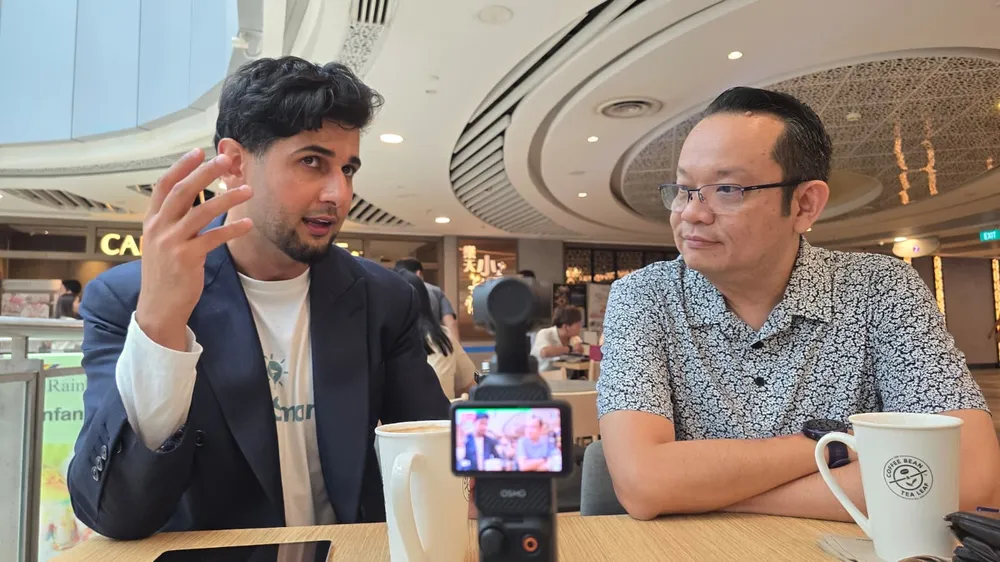
Ali knew he was passionate about education and business, so, combining the two, he set up a tutoring consultancy, drawing on the network he had created while in banking, to help the children of wealthy families.

“I found these kids already had a level of commercial awareness and financial literacy, something I was never taught when I was at school. For them, they believed in creating wealth, value, and starting a business. For everyone else – kids like me, when I was growing up – the only route they could see to getting money was to get a job.”

That observation became the genesis of what came next. The gap between the children of wealthy families and everyone else, Ali concluded, was not intellectual. It was informational, relational, and cultural – and therefore closable. He wound down the consultancy and founded LifeSmart, whose early workshops evolved into digital games. The goal was to make financial education accessible for every learner.

“I spent so long in education, so long in finance, and now I saw this problem in financial education. LifeSmart brought all this together.”

Learning from Fellowship travels

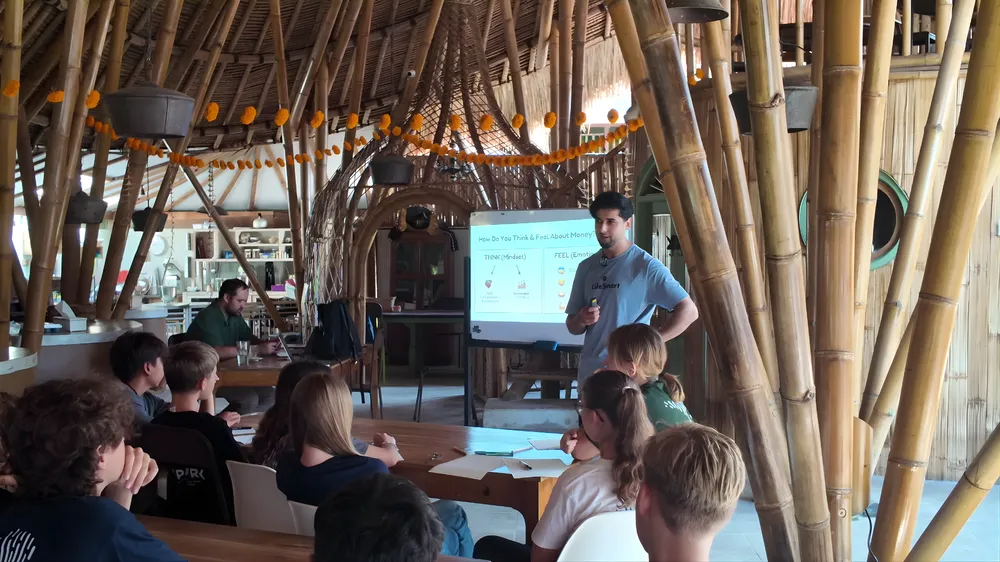
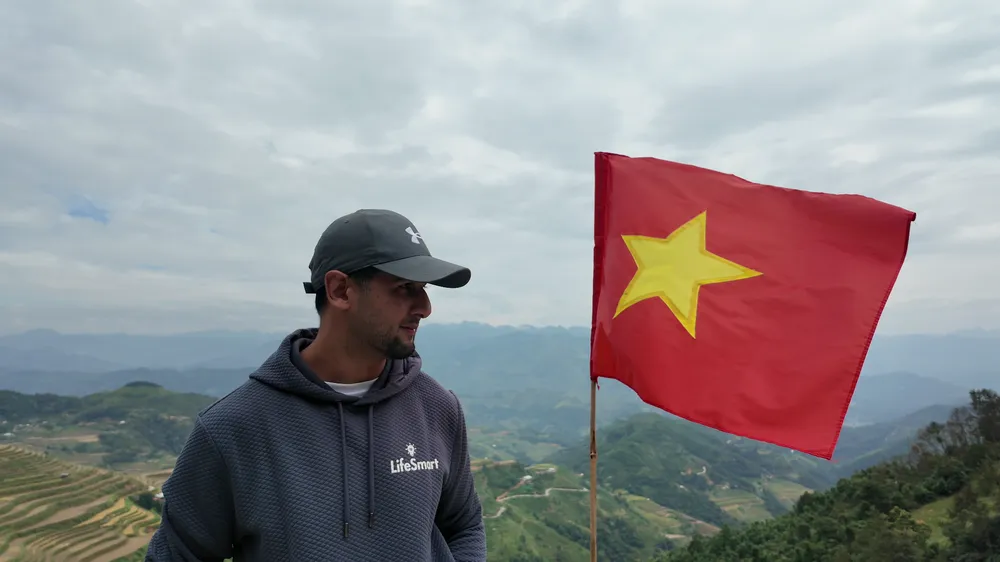
Ali selected three differing destinations: Singapore, featuring a highly engineered, state-led system with deep institutional support; Vietnam, where rapid fintech growth has outpaced its lack of a national literacy strategy; and Bali, where traditional village and family structures manage financial life in the absence of formal systems.

He then distilled his learning into a single framework, which he calls 'Moments, Trust, and Practice’, based on five key findings. Among these were the discoveries that behavioural shifts occur at life milestones – like a first job or tenancy – rather than through curriculum-based teaching; and while policy defaults like pension auto-enrolment drive more change than curriculum reform, family and community remain the primary teachers where formal systems are absent.

From what he discovered, Ali completely updated the LifeSmart curriculum and extended the services it offers. His findings have also been taken directly to UK policy audiences: he has presented to the Money and Pensions Service, to the Financial Education Forum convened by Young Enterprise, and to the Bank of England, with further briefings in progress.

Ali’s input comes at a critical time. The UK government’s 2025 Financial Inclusion Strategy marks a major shift toward improving the country’s lagging financial literacy. While there is now broad agreement that financial education is essential, a debate remains over the best approach. Ali is blunt about the starting point: the UK has spent two decades funding financial education that has not changed behaviour, and the 2025 strategy is the best opportunity in a generation to stop doing that.

"[It wasn't until] I started writing the report I realised how much impact the trip had had. The Fellowship has given me a framework, the evidence to back it up, and the credibility to be heard."

Impact of the Fellowship

Ali is now finalising his written report and also editing 30 hours of video footage he took to create films explaining his findings, aimed at three different audiences: government, charities, and the private sector.

And his work will continue. “Everyone said the Fellowship would be life changing. It didn’t seem so at first – it was fun, but it was overwhelming. Then I started writing the report and realised how much impact the trip had had. The Fellowship has given me a framework, the evidence to back it up, and the credibility to be heard. The line I want the report to be remembered by is this: financial capability is not built when people hear the right information, it is built when systems, trust, and practice make the right judgement easier. The 2025 Financial Inclusion Strategy is the best window in a generation to finally get this right. If we don’t, we will be writing this same report in 2035.”

Disclaimer

The views and opinions expressed by any Fellow are those of the Fellow and not of the Churchill Fellowship or its partners, which have no responsibility or liability for any part of them.

Related

Blogs & conversations

What it Takes to Build Trauma-Responsive Systems

After her Fellowship exploring trauma, attachment, and ACEs, Jane Pepa reflects on what it takes to move from trauma-informed training to real system change. Through her work with the Merseyside Violence Reduction Partnership, she has supported over 12,000 public service staff, from education to policing, to better understand and respond to trauma. Now working to embed trauma-responsive approaches across systems in Merseyside, she shares how this learning is being applied in practice through collaboration and ongoing support.

By Jane Pepa,

Blogs & conversations

Building together: rethinking teacher wellbeing and career sustainability

During her Churchill Fellowship in Ghana, Dr Chiedza Ikpeh explored how teacher wellbeing grows through community, adaptability, and shared responsibility. Speaking with teachers, she how collective approaches help educators thrive, even in challenging conditions. Witnessing this resilience reshaped how she understands teaching and what allows careers to be sustained over time, and Chiedza is now bringing this learning into her research and development work with teachers across the UK.

By Chiedza Ikpeh,

Blogs & conversations

Following the questions: a Fellow's journey

From an off-the-cuff question as a teacher to lasting change across policy and practice, Sarah Beresford traces how curiosity shaped her Churchill Fellowship and everything that followed. She reflects on learning from other countries, turning insight into action, and how asking the right questions has helped centre children’s voices in the criminal justice system.

By Sarah Beresford,

Blogs & conversations

Supporting adolescent mental health in schools

Through his Churchill Fellowship, Charlie Samuda explored how schools in the USA, Canada, and South Korea are responding to the adolescent mental health crisis. Visiting over 30 organisations and schools, he examined how independent guidance, curriculum design, counselling, and safety systems can help schools support students more effectively. He reflects on what England could learn from these approaches as pressures on schools continue to grow.

By Charlie Samuda,

Newsletter Sign Up